

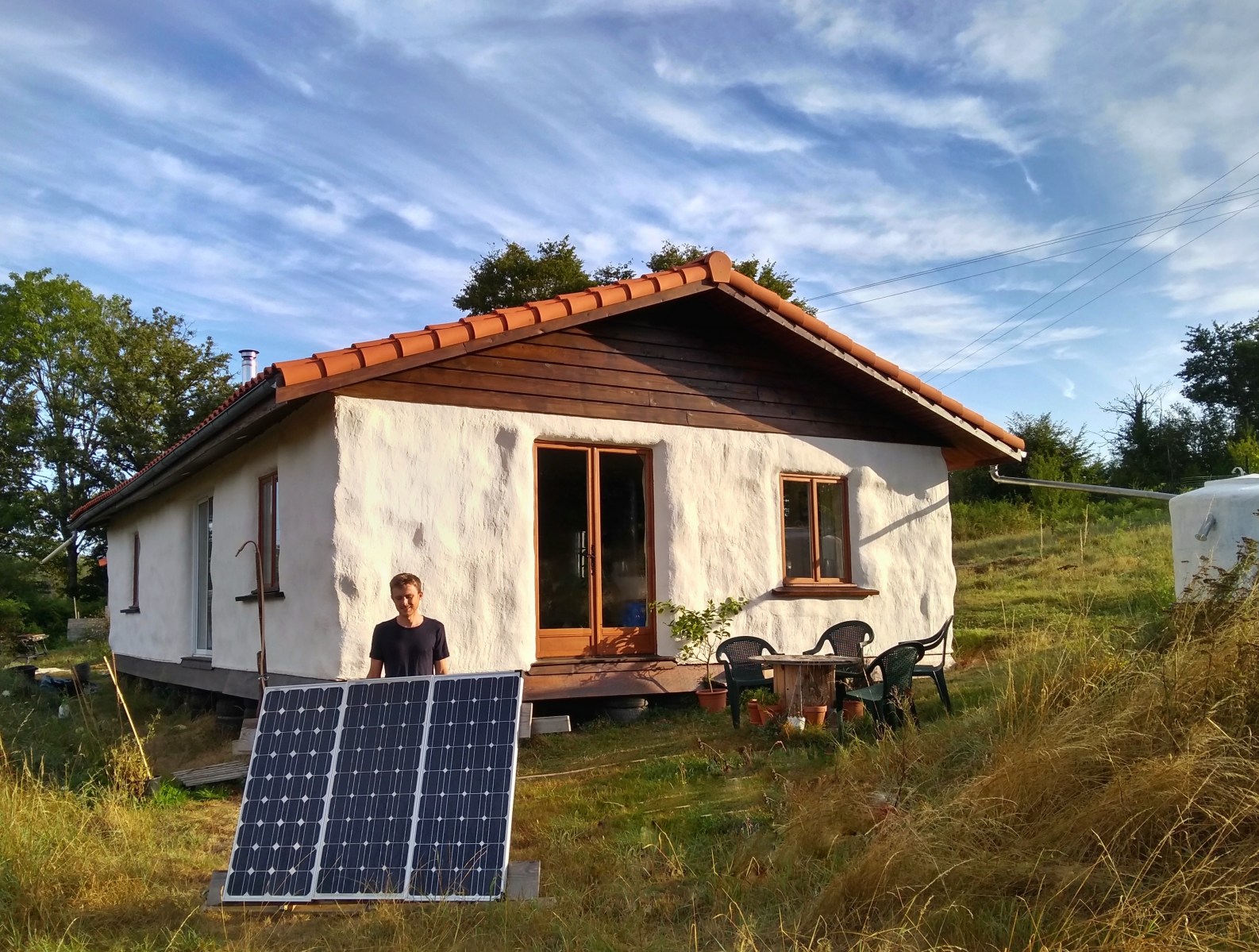
We have been relying solely on an off-grid, self-built electricity system for over 6 years now. For more details on the conception, installation and journey of this particular system check out some earlier posts.
Since the last update a few changes have been made. The main one is the replacement of our original DIY powerwall with a larger battery made up of new cells. The old one will remain as a backup battery, which in turn replaces our worst battery, one made from secondhand cells bought on a, what turned out to be, fraudulent ebay page. The cells were not properly tested and had far less capacity than advertised.
The new battery is built using the same method, but this time with new cells, bought from a reputable site. We opted for new cells for numerous reasons. Firstly, they are a known quantity with equal capacities and service life. Secondly, it meant far less hassle in terms of testing as was required when assembling packs with secondhand cells.

A note on the old one. Its performance truly blew us away. Goodness knows how old the cells were which I salvaged from countless laptop packs of all brands, shapes and sizes. Nevertheless, we relied on it everyday for over 6 years. And as I mentioned above, it is by no means useless, we have just retired it to backup status. It still has a useful capacity, albeit somewhat diminished, and operates perfectly safely.
This brings me onto the third reason for the new cells. These particular ones are Samsung INR21700 33J. Geeks among you will notice they are not 18650, the standard size (18mm diameter, 65mm length) for many applications such as vapes. These particular ones were of astonishingly good value, coming in at around €1.20 per cell at the time. They are rated for 2000 cycles (this is huge, considering most 18650s are rated for only 500 or so) and have a decent capacity, albeit less than cells of the same size, of 3270Mah. Another selling point for us was the low discharge rating, just 6.4 Amps. In short, it’s long service life, decent capacity and optimisation for relatively low drain applications made it the ideal choice. Apparently they are designed for EVs.
Taking all this into account, we can expect an extremely durable battery pack. Especially when you consider the second hand pack made of 18650 cells rated for far fewer cycles is still going, well, we can expect a decade, perhaps two, of service life.
Some technical details may interest some of you. The pack has a 3s72p configuration. This means each pack has 72 cells in parallel and the 3 packs are themselves wired in series. Each pack is 4.2v so 3 of them in series gives 12.6v. As mentioned in other posts, our house is wired for 12 volts. Each cell has a rated capacity of 3270 Mah. I cycled a few of them and reliably got 3000 MaH without unnecessarily straining the battery so I’ll work with that number. 72*3000 = 216000 = 216 Amp Hours. This is around double the previous pack which it replaces. I say ‘around’ because the capacity of the recycled cells was vague at best and definitely diminished with time.

Furthermore, the cells and the holders, plus some copper cost little more than 350 Euros. This is incredibly cheap for such a large-capacity battery with such a long service life. Winning!
One more change was the decision to use battery holders to reduce the required soldering and to ensure I wasn’t soldering directly onto cells, which while perfectly safe, is a little unnerving and fiddly. Another advantage is that checking individual cells is now a piece of cake, I just click them out!

I do not use a BMS (Battery Management System), I rely on the very low demands placed on the battery along with the relatively slow charging from our small solar system. This means the batteries are operating so far within their charge and discharge limits that we will never push them hard enough to notice minor differences which could lead to imbalances. When we use an inverter to power our thirstiest appliances (the rice cooker and the washing machine), we are only demanding about 42 amps from the battery. This, divided across the 72 cells is around .58 Amps per cell. Their maximum discharge rate is 6.4A! So we are asking less than 10% of its rated discharge, and this is only very occasionally.
Design with plenty of margin, operate well within parameters and over design. These are principles we have used to ensure safety, especially considering our lack of technical expertise in this area. In terms of performance it has made a noticeable difference. We are more easily able to power the rice cooker and washing machine and have generally noticed ourselves checking the battery less often than in previous winters.
Thanks for geeking out with me!






 Les Vignes Basses